360 Degree Feedback: Understanding Performance from Every Angle
Feedback is an important part of personal and professional development. It helps people understand how they are performing, how their behaviour affects others and where improvements can be made. In many workplaces, feedback traditionally comes from a line manager, but this can provide only one perspective on a person’s contribution, communication style and working relationships.
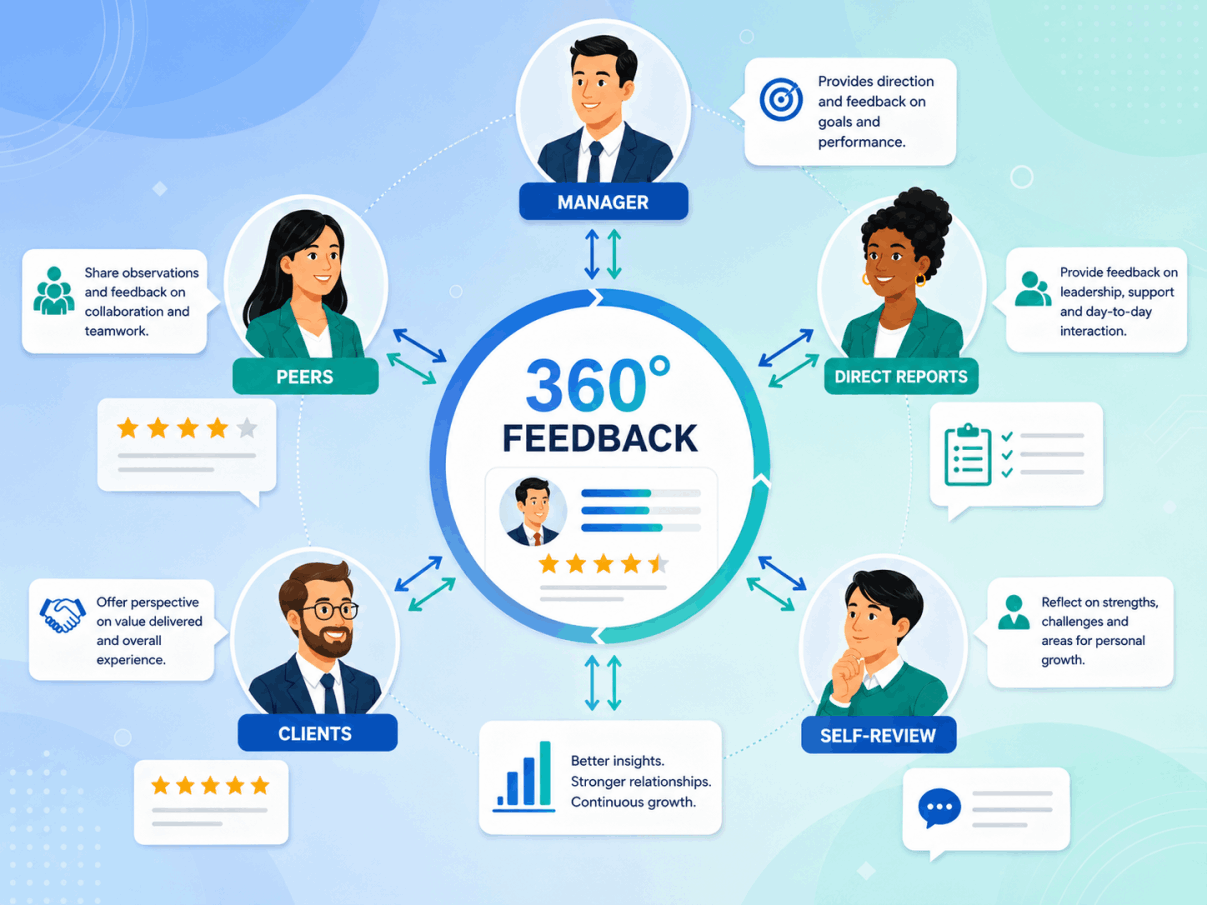
360 degree feedback is a structured process that gathers views from multiple sources, such as managers, colleagues, direct reports and sometimes customers or stakeholders. This wider perspective can provide a more balanced picture of performance, behaviour and development needs. By collecting feedback from different angles, individuals can gain insight that may not appear in a standard appraisal.
One of the main benefits of this approach is improved self-awareness. People may not always realise how their actions, communication or decisions are experienced by others. Feedback from several groups can highlight patterns, strengths and blind spots. This can help individuals compare how they see themselves with how they are perceived by those around them.
The process is often used for leadership development, management training, team improvement and personal growth. It can help identify areas such as communication, collaboration, decision-making, emotional intelligence, problem-solving, accountability and support for others. Rather than focusing only on targets or results, it considers workplace behaviours that influence performance.
A good feedback process should use clear and relevant questions. These should focus on observable behaviours rather than vague opinions. For example, questions may ask whether a person listens well, communicates clearly, supports colleagues, manages conflict constructively or follows through on commitments. Behaviour-based feedback is easier to understand and turn into practical action.
Confidentiality is important for honest responses. People are more likely to give meaningful feedback when they know their comments will be handled carefully. If respondents feel exposed, they may avoid giving useful information or provide only safe answers. A clear explanation of how feedback will be collected, reported and used helps build trust in the process.
The feedback report should be balanced. It should highlight strengths as well as development areas. Knowing what someone does well is just as useful as identifying what needs improvement. Strengths can be developed further, while weaker areas can be addressed through coaching, training, mentoring or changes in working habits.
Receiving feedback from several people can sometimes feel challenging. Unexpected comments may be difficult to process, particularly if they differ from someone’s own view. For this reason, support is useful. A manager, coach or HR professional can help the individual review the results calmly, identify themes and decide which actions will be most helpful.
Action planning is the most important stage. Feedback alone does not create improvement unless it leads to change. The individual should choose a small number of realistic priorities and create a plan for development. This might include improving communication, asking for more input, giving clearer updates, managing time better or strengthening working relationships.
Organisations can also benefit from using feedback in a structured way. It can reveal common development needs across teams, improve leadership standards and encourage a culture of open communication. When people see that feedback leads to positive action, they are more likely to engage honestly with future processes.
However, the process must be handled carefully. If feedback is used as a punishment, surprise assessment or popularity contest, it can damage trust. Poorly designed questions, unclear communication or lack of follow-up can also reduce its value. The purpose should always be development, not blame.
It is also important to choose the right respondents. Feedback should come from people who have enough experience of working with the individual to provide useful comments. Including people with limited contact may produce weak or unreliable feedback. A balanced group gives a clearer and more meaningful result.
Timing matters too. The process can be useful during leadership programmes, annual development reviews, promotion preparation, team change or personal development planning. It should not be reserved only for problem situations. Regular, constructive feedback can help people improve continuously rather than waiting until issues become serious.
In summary, 360 degree feedback is a valuable tool for understanding performance, behaviour and development needs from multiple perspectives. By gathering views from managers, colleagues, direct reports and stakeholders, individuals can gain a fuller picture of their strengths and areas for improvement. When handled confidentially and followed by clear action planning, it can support stronger communication, better leadership and ongoing professional growth.